What is IDX system in real estate?
 hsnmokh15@gmail.com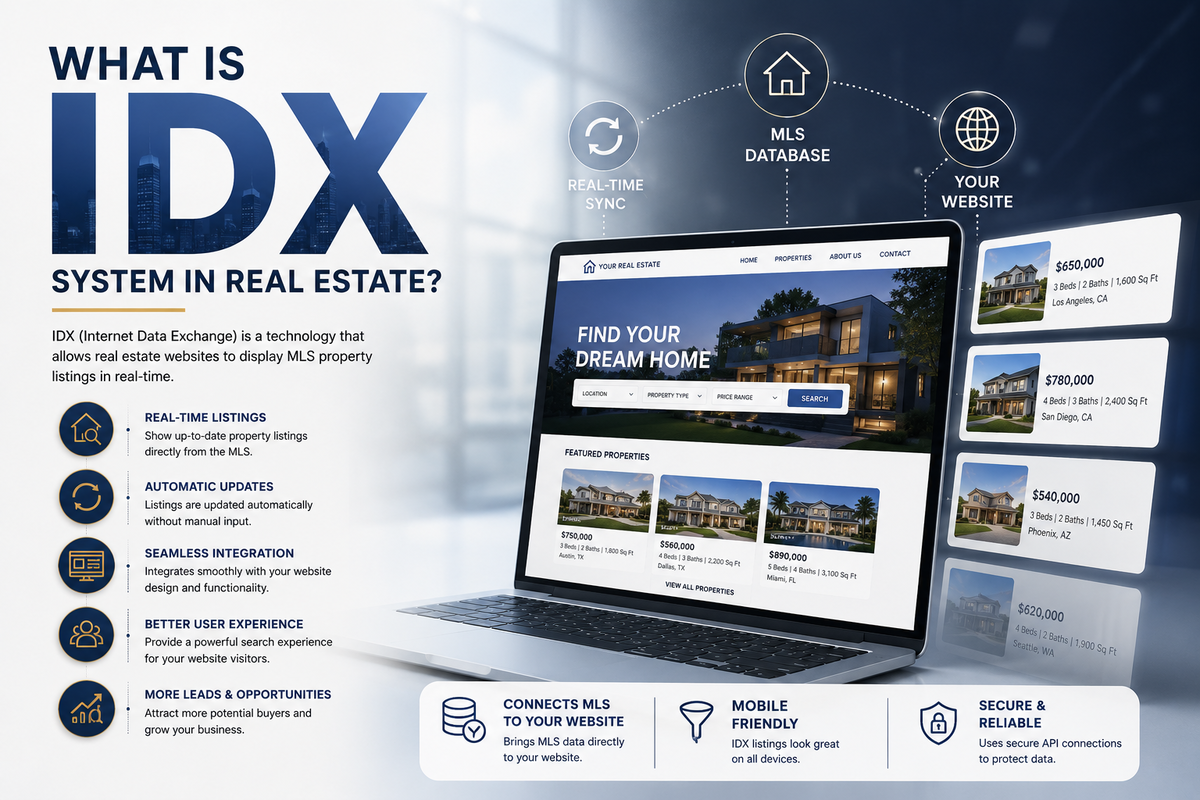

Technology has become a major part of the modern real estate industry, helping agents and buyers connect more efficiently online. One of the most important tools used by real estate professionals today is What is IDX system in real estate?, which allows property listings from MLS databases to appear directly on agent websites. This system improves property visibility and provides users with updated listing information in real time. It also enhances the browsing experience through advanced search features and accurate property data. As competition grows in the digital market, IDX integration continues to play a vital role in real estate marketing success.
In real estate technology, IDX is a crucial tool that streamlines property data sharing and ensures accurate, up-to-date listings. Understanding its function helps buyers, sellers, and agents navigate the market more efficiently.
The IDX system plays a central role in modern real estate technology by making MLS property listings publicly accessible across multiple platforms. Its real-time data sharing and integration capabilities improve efficiency for buyers, agents, and real estate businesses.
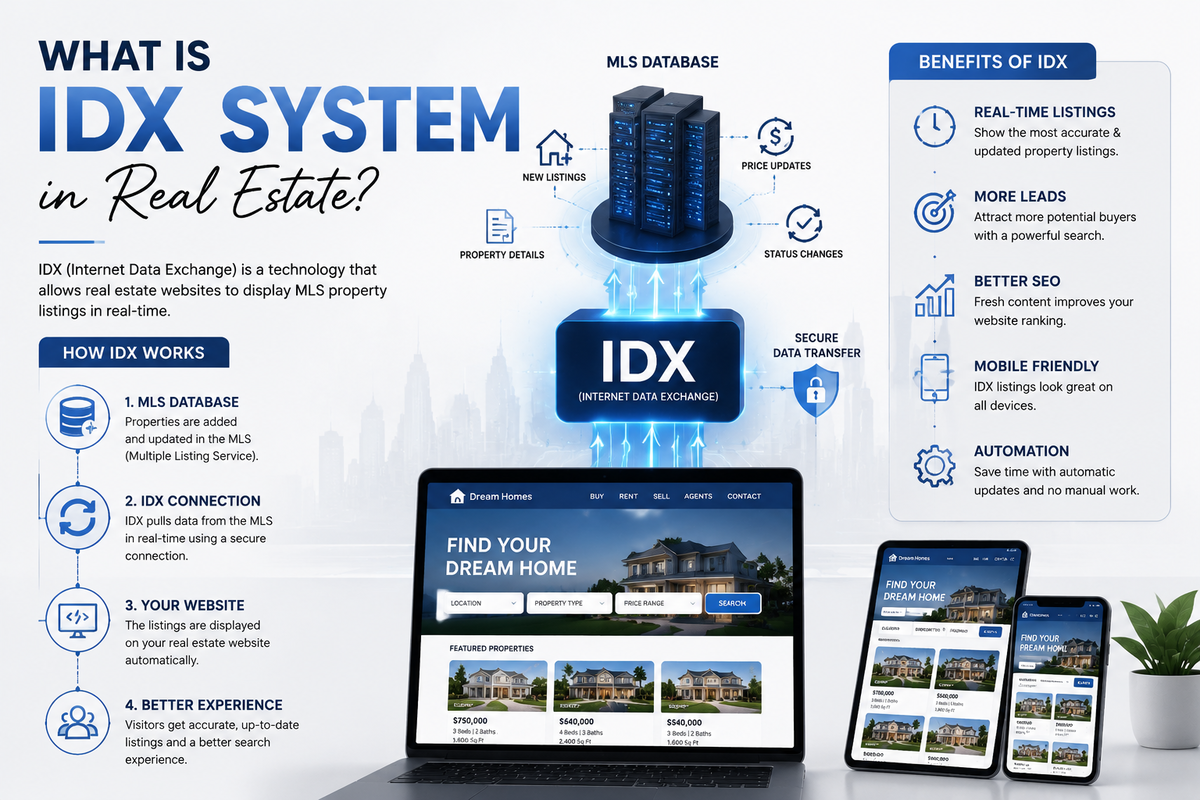
The IDX system’s real power lies in the mechanics behind it — specifically how property data flows from its source to the screens of buyers and agents in real time. Breaking down the process into its three core stages makes it much easier to understand why IDX has become such a foundational tool in modern real estate.
To fully grasp the functionality of the IDX system, it’s helpful to break down its operational mechanics into three key stages: data sourcing, synchronization, and display.
The process begins with the MLS, which serves as the primary database for property listings. Agents and brokers input their listings into the MLS, where they are stored and managed. The IDX system then accesses this data through approved channels, ensuring that only authorized and up-to-date listings are shared.
Once the data is sourced, the IDX system uses APIs to pull listings in real time. This synchronization occurs continuously, meaning that any changes—such as price adjustments, new listings, or sold properties—are reflected instantly across all connected platforms. The use of APIs ensures that the data transfer is both secure and efficient, minimizing the risk of errors or delays.
The IDX system enhances the real estate experience by delivering accurate property data and automated updates across multiple platforms. Its flexibility and real-time functionality make property searches faster, easier, and more reliable for both buyers and agents:
IDX and MLS are frequently mentioned together, but confusing one for the other can lead to a fundamental misunderstanding of how property data is managed and distributed. Clarifying the distinction between these two systems is essential for anyone seeking to navigate real estate technology with confidence.
While IDX and MLS (Multiple Listing Service) are closely related, they serve distinct purposes within the real estate ecosystem. Understanding the differences between the two is crucial for both agents and consumers navigating the market.
| Aspect | MLS | IDX System |
| Ownership & Access | Private database managed by real estate boards and associations | Public display system for MLS listings on third-party websites |
| User Access | Limited to licensed agents and brokers | Accessible to buyers, investors, and the public |
| Main Purpose | Internal property database for professionals | Sharing and displaying listings online in real time |
| Listing Visibility | Limited within MLS network | Listings appear on websites, apps, and social platforms |
The IDX system’s advantages extend well beyond the agent’s desk — it fundamentally changes the experience of buying and selling property for everyday users. Whether you’re searching for your first home or trying to sell quickly in a competitive market, IDX provides tools that put more control and transparency in the hands of both parties.
The IDX system isn’t just a tool for real estate professionals—it also empowers homebuyers and sellers by providing greater transparency, convenience, and control over the property search process. Here’s how it benefits each party:
Buyers gain access to a comprehensive and up-to-date database of listings, eliminating the need to visit multiple agent websites or rely on outdated information:
Sellers benefit from increased exposure and faster sales cycles, thanks to the broader reach of IDX-powered listings:
In markets like UAE real estate, where speed and transparency are key, the IDX system provides a significant advantage for both buyers and sellers. For buyers, it simplifies the search process, while for sellers, it ensures their property reaches the widest possible audience.
Not all IDX integrations are built the same — the right type depends on the technical requirements, budget, and goals of the real estate business implementing it. Understanding the different integration options available is the first step toward choosing the solution that best fits your needs.
The IDX system offers various levels of integration, catering to different needs and technical capabilities. Depending on the requirements of a real estate business, agents or developers can choose from basic, advanced, or custom IDX solutions. Each type provides distinct features and levels of customization.
Ideal for agents or small firms looking to display MLS listings with minimal setup. Basic IDX integrations are straightforward and cost-effective, making them a popular choice for those new to the system.
Yes, IDX can improve real estate SEO and lead generation by adding regularly updated property content, increasing website traffic, and helping agents capture leads through searches, alerts, and inquiry forms.
A strong IDX website should include advanced search filters, interactive maps, mobile responsiveness, virtual tours, saved searches, automated alerts, and easy contact options for buyers and sellers.
Yes, IDX listings must follow MLS and broker regulations regarding data accuracy, display permissions, branding, and ethical use. Agents and websites must comply with these rules to legally display property listings.