Dubai continues to attract real estate investors from around the world thanks to its strong rental market and high return potential. Many buyers today focus on Dubai properties with highest rental yield to maximize passive income and long-term profitability. Areas with high tenant demand, modern amenities, and strategic locations often deliver better rental performance and stable occupancy rates. Whether you are a first-time investor or expanding your portfolio, Dubai offers a variety of opportunities with competitive rental returns and strong market growth.
What Is Rental Yield in Real Estate?
Rental yield is a fundamental metric in real estate investment that measures the annual income generated from a property relative to its purchase price. Unlike capital appreciation, which focuses on long-term price growth, rental yield provides a clearer picture of short-to-medium-term profitability.
For investors, understanding rental yield helps differentiate between properties that generate steady cash flow and those that rely solely on potential future value.
The formula for calculating rental yield is straightforward: divide the annual rental income by the property’s total cost (including purchase price and any additional expenses like agent fees or renovations), then multiply by 100 to convert it into a percentage.
Types of Rental Yield
Investors often encounter two primary types of rental yield calculations:
- Gross Rental Yield: This is the simplest form, calculated using only the annual rental income and the property’s purchase price. It provides a quick snapshot but doesn’t account for expenses.
- Example: A $400,000 property rented for $24,000 annually would yield a gross rental yield of 6%.
- Net Rental Yield: This takes into account all operating expenses, including property taxes, insurance, maintenance, and management fees. It offers a more realistic view of actual returns.
- Example: If the same property incurs $8,000 in annual expenses, the net rental income would be $16,000, resulting in a net rental yield of 4%.
Understanding these distinctions is crucial for investors evaluating dubai properties with highest rental yield. While gross yields might appear attractive, net yields provide a clearer picture of true profitability, especially in a dynamic market like Dubai.
Why Rental Yield Matters More Than Capital Growth?
- Rental yield provides consistent cash flow and immediate income.
- Investors can reinvest rental profits into additional properties or other investments.
- It helps reduce reliance on long-term property appreciation alone.
- High rental yield properties can offer stable returns even during market fluctuations.
- Areas with strong tenant demand maintain better occupancy rates.
- Popular locations like Dubai Marina and Downtown Dubai attract expatriates and long-term tenants consistently.
- Rental income can help cover property expenses such as maintenance and mortgage payments.
- Real estate creates opportunities for passive income with minimal daily involvement.
- Professional property management companies make rental investments easier to manage.
- Rental yield adds financial security and diversification to an investment portfolio.
- Dubai’s growing population and tourism sector continue to support strong rental demand.
Why Is Dubai Attractive for Property Investors?
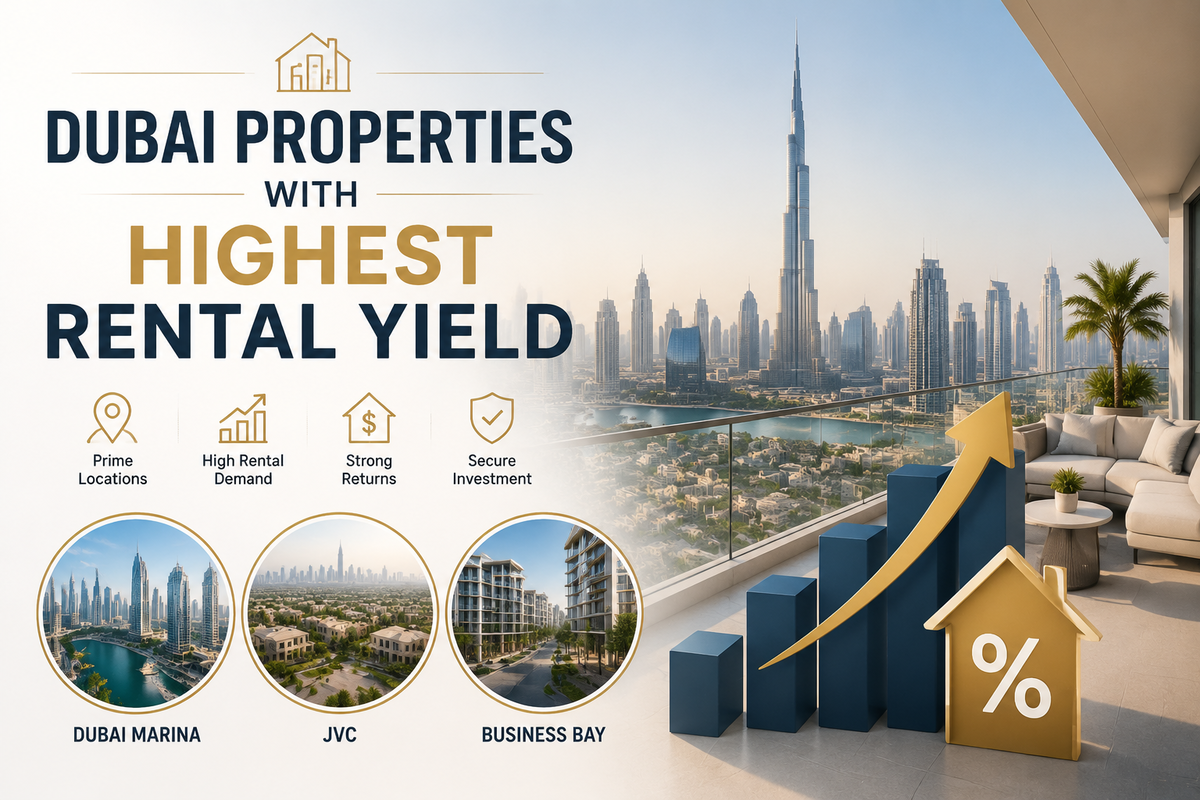
- Dubai offers strong rental demand driven by tourism, business growth, and a large expatriate population.
- The city is considered one of the top destinations for investors seeking dubai properties with highest rental yield.
- Dubai’s strategic global location attracts international businesses and residents year-round.
- Investors benefit from a tax-free environment with no income tax on rental earnings.
- Property owners can retain 100% of their rental income.
- Freehold areas allow 100% foreign ownership without requiring local partnerships.
- Dubai’s business-friendly policies continue to attract multinational companies and skilled professionals.
- High population growth supports long-term demand for residential rentals.
- The market offers opportunities for both short-term and long-term rental investments.
- Luxury developments and modern infrastructure increase tenant demand across prime locations.
- Dubai’s stable economy and investor-friendly regulations strengthen confidence in the real estate market.
- International investors can access a wide range of property options, from affordable apartments to luxury residences.
Comparing Dubai to Other Global Markets
To highlight Dubai’s unique advantages, here is a comparison of rental yields across major cities:
- London, UK: Average rental yield of 3–4%, with high property prices and strict foreign ownership laws.
- New York, USA: Yields around 2–3%, but with significant management costs and regulatory hurdles.
- Singapore: Yields of 3–5%, but with high property taxes and limited foreign ownership.
- Dubai, UAE: Yields ranging from 5% to 8% in prime areas, with no income tax and 100% foreign ownership.
The data clearly shows that Dubai outperforms many global markets in terms of rental yield potential. For investors seeking rental yields in Dubai real estate market, the city’s combination of high demand, tax benefits, and investor-friendly policies makes it a top choice.
Dubai Properties With Highest Rental Yield
When searching for Dubai properties with highest rental yield, investors should focus on areas with strong tenant demand, high occupancy rates, and minimal vacancy periods. While luxury properties in iconic locations like Burj Khalifa or The Palm Jumeirah command premium prices, they often yield lower rental returns due to high purchase costs. Instead, mid-market and affordable properties in high-demand areas tend to offer the best balance between yield and capital appreciation.
Top Property Types for High Rental Yield
Not all property types deliver the same rental returns. Here are the most profitable options for investors targeting high yields:
- Studio Apartments: Ideal for young professionals and expatriates, these properties require minimal space and offer quick occupancy. In areas like Dubai Internet City or Dubai Silicon Oasis, studio apartments can achieve gross yields of 6–7%.
- 1-Bedroom Apartments: A popular choice for singles and couples, these units balance affordability with demand. In communities like Dubai Marina or Jumeirah Lakes Towers (JLT), 1-bedroom apartments often yield 5–6%.
- Serviced Apartments: These short-term rental properties cater to tourists and business travelers, offering higher daily rates. Locations near Dubai International Airport or Dubai Mall see strong demand, with yields exceeding 7% in some cases.
- Townhouses and Villas: While these properties have higher purchase prices, they attract families and long-term tenants, providing stable rental income. In areas like Arabian Ranches or Meadows, townhouses can yield 4–5%.
- For investors prioritizing best areas in dubai for rental income, focusing on these property types in the right locations can significantly boost returns.
Step-by-Step Guide to Calculating Rental Yield
- Determine the Annual Rental Income
- Multiply the monthly rent by 12 to get the yearly income.
- Example: If a property rents for AED 40,000 per month, the annual income is AED 480,000.
- For short-term rentals (e.g., Airbnb or serviced apartments), calculate based on average nightly rates multiplied by occupancy days per year.
- Identify the Total Property Cost
- Include the purchase price, agent fees (typically 2% in Dubai), and any renovation or furnishing costs.
Example: A property priced at AED 1,500,000 with a 2% agent fee (AED 30,000) and AED 50,000 in renovations totals AED 1,580,000.
Calculate Gross Rental Yield
- Use the formula: (Annual Rental Income / Total Property Cost) × 100
- Example: (AED 480,000 / AED 1,580,000) × 100 = 30.38% gross yield (Note: This is hypothetical; actual yields in Dubai typically range from 5% to 8% for residential properties.)
- Gross yield is useful for quick comparisons but doesn’t account for expenses.
- Account for Operating Expenses to Find Net Rental Yield
- Subtract annual expenses such as:
- Property management fees (typically 5–10% of rent)
- Maintenance costs (1–2% of property value)
- Insurance (0.2–0.5% of property value)
- Council taxes (if applicable, though Dubai has no property tax)
- Example: If annual expenses total AED 120,000, the net rental income becomes AED 360,000.
- Net yield formula: (Net Rental Income / Total Property Cost) × 100
- = (AED 360,000 / AED 1,580,000) × 100 = 22.78% net yield (Again, this is illustrative; real-world net yields in Dubai are lower but still competitive.)
- Adjust for Financing Costs (If Applicable)
- If the property is mortgaged, subtract the annual mortgage payment from net rental income to determine cash flow yield.
Example: A mortgage of AED 100,000/year reduces cash flow to AED 260,000, resulting in a cash flow yield of 16.46%.
Key Insight: Financing can significantly impact profitability, especially in high-interest environments.
Dubai-Specific Considerations for Rental Yield Calculations
Investing in Dubai introduces unique factors that can alter rental yield calculations. Below are critical adjustments investors must make:
Currency Fluctuations: Rental income is often denominated in AED, but purchase costs may involve USD or EUR. Fluctuations can impact net returns.
Example: A property bought at $400,000 (USD) with a 5% annual appreciation in USD but a 3% depreciation in AED could skew yield perceptions.
Vacancy Rates: Dubai’s vacancy rates vary by area. Prime locations like Downtown Dubai or Palm Jumeirah have lower vacancies (<3%), while emerging areas like Dubai South may see higher vacancies (5–8%). Adjust gross yield by subtracting an estimated vacancy rate (e.g., 5%) to refine projections.
Property Management Fees: Fees in Dubai range from 5% to 10% of rental income, depending on the management company.
Example: A 7% fee on AED 480,000 rent equals AED 33,600/year, directly reducing net yield.
- Maintenance and Repairs: Older properties or those in high-wear areas (e.g., near construction zones) may require 2–5% of property value annually in maintenance.
- Example: AED 1,580,000 property with 3% maintenance costs = AED 47,400/year.
- Short-Term vs. Long-Term Rentals: Short-term rentals (e.g., Airbnb in Dubai Marina) may yield higher daily rates but incur higher turnover costs (cleaning, marketing). Long-term rentals offer stability but may require tenant screening fees (AED 500–2,000 per lease).
Tools and Resources for Rental Yield Analysis in Dubai
- To streamline calculations, investors can leverage the following tools and resources:
- Online Rental Yield Calculators: Platforms like Property Finder UAE or Bayut offer free calculators that input purchase price, rent, and expenses to generate gross and net yields.
- Dubai Land Department (DLD) Reports: The DLD publishes quarterly reports on rental trends, vacancy rates, and average rents by area. Access via Dubai Land Department.
- Real Estate Portals with Yield Data: Websites like Bayut provide filters to sort properties by rental yield.
- Property Management Software: Tools like BuildOps or AppFolio help track expenses, rent collection, and cash flow for Dubai properties — useful for calculating net rental yield over time.
Common Mistakes to Avoid When Calculating Rental Yield
Even experienced investors can overlook critical factors when calculating rental yield in Dubai. Here’s what to avoid:
- Ignoring Hidden Costs: Overlooking expenses like Dubai’s 5% VAT on rent collection services or unexpected repairs can erode profitability.
- Example: A property manager charging 8% of rent + VAT adds 9.4% total cost to expenses.
- Overestimating Rental Income: Assuming maximum rent without accounting for market fluctuations or tenant negotiations can lead to unrealistic projections.
- Solution: Use average rent data from DLD reports rather than peak rates.
- Neglecting Depreciation: While Dubai’s real estate generally appreciates, older properties may lose value over time.
- Example: A 15-year-old villa in Jumeirah Village Circle may depreciate at 1–2% annually, reducing long-term yield.
- Focusing Only on Gross Yield: High gross yields don’t always translate to profit after expenses. Always calculate net yield for accuracy.
- Example: A property with 8% gross yield but 5% expenses may only deliver 3% net yield.
- Underestimating Vacancy Periods: Seasonal demand (e.g., lower rents in summer due to school holidays) can impact cash flow.
- Tip: Allocate 1–3 months of rent as a buffer for vacancies in your calculations.
- Example Calculation for a Dubai Property
FAQs
What are the costs associated with property investment in Dubai?
Property investment costs in Dubai may include the property price, Dubai Land Department fees, registration charges, agent commissions, service fees, and maintenance costs. Investors should also consider mortgage and payment plan expenses if applicable.
Can off plan properties provide higher rental income?
Yes, off plan properties can generate higher rental income in the future, especially when purchased in high-demand areas at lower launch prices. Modern amenities and newer developments often attract more tenants and better rental rates.
Which Dubai communities are popular among tenants?
Communities like Dubai Marina, Downtown Dubai, Jumeirah Village Circle, Business Bay, and Dubai Hills Estate are highly popular among tenants due to their locations, amenities, and lifestyle options.
How can investors maximize rental returns in Dubai?
Investors can maximize rental returns by choosing high-demand locations, investing in modern properties, maintaining the unit properly, and offering competitive rental prices based on market trends.
 hsnmokh15@gmail.com