Dubai has become one of the leading global destinations for real estate investment thanks to its strong economy and investor-friendly environment. However, understanding the things to know before investing in Dubai property is essential for making smart and profitable decisions. From legal regulations and ownership rules to location selection and payment plans, several factors can influence your investment success. Investors should also evaluate rental demand, developer reputation, and future market growth before purchasing a property. With proper research and planning, Dubai’s real estate market can offer excellent long-term returns and valuable investment opportunities.
Why Dubai Attracts Global Real Estate Investors
Dubai has become one of the world’s leading real estate investment destinations thanks to its strategic location, strong economy, and investor-friendly environment. The city combines modern infrastructure, luxury developments, and flexible property ownership laws, making it highly attractive to international investors seeking strong returns and long-term growth opportunities. Dubai’s real estate market is also known for its resilience, high rental demand, and continuous urban development, which further strengthens its global appeal.
- Strategic location connecting Europe, Asia, and Africa.
- Tax-free environment with no income or capital gains taxes.
- World-class infrastructure, including modern airports and metro systems.
- Easy property buying process for foreign investors.
- Availability of freehold ownership for non-residents.
- Strong and resilient real estate market.
- High rental yields reaching 7–9% in some areas.
- Wide variety of residential, commercial, and luxury properties.
- High quality of life and excellent safety standards.
- Future development plans like the Dubai 2040 Urban Master Plan supporting long-term growth.
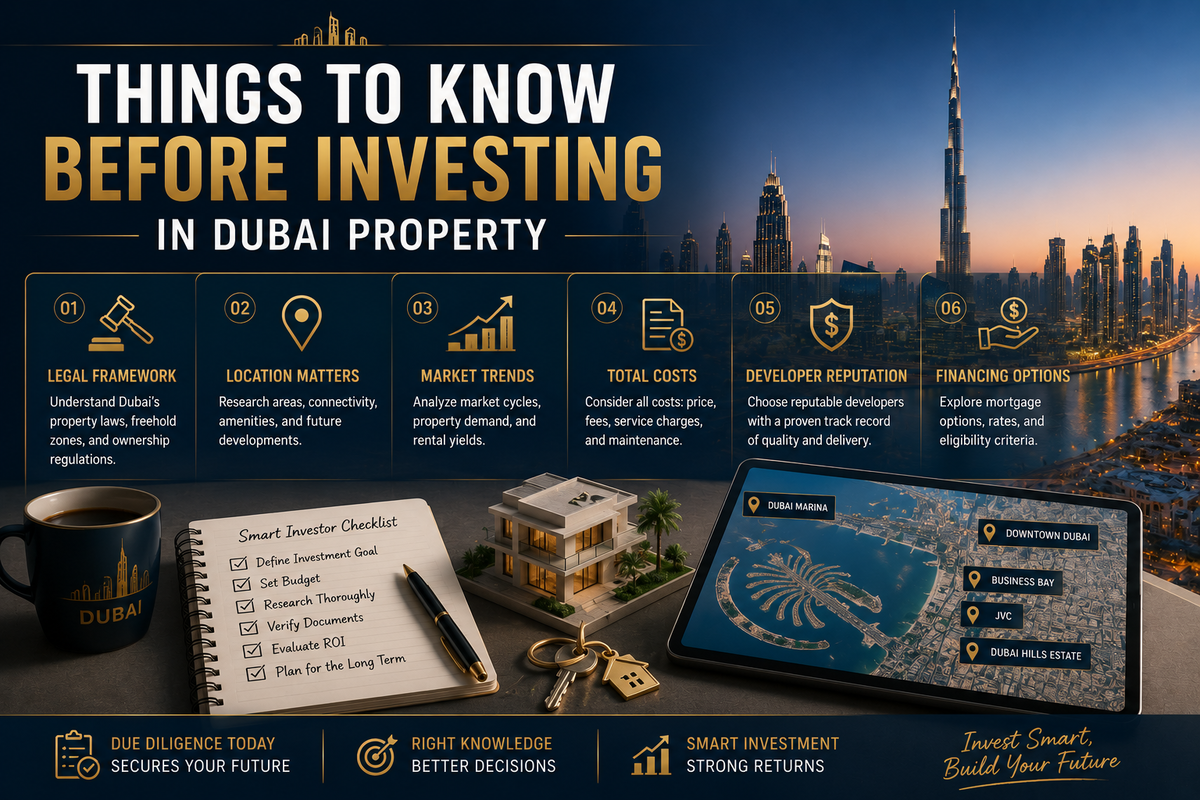
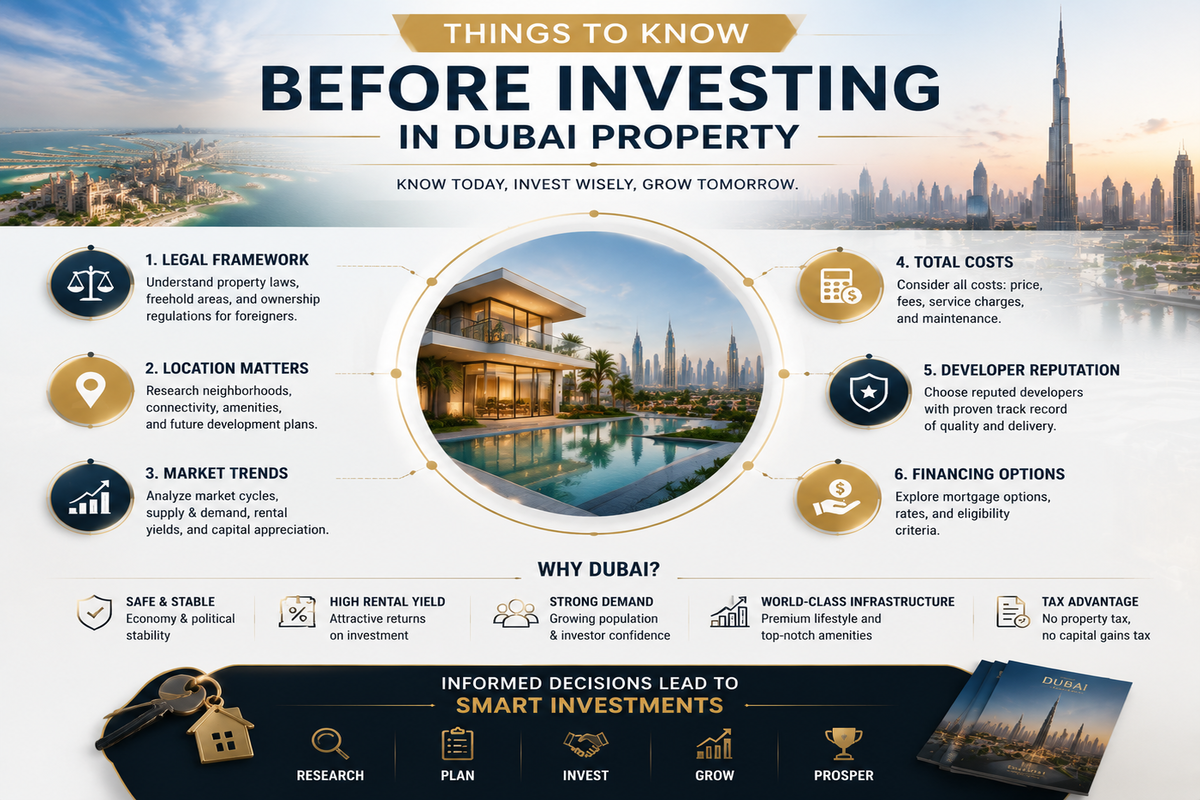
Things to Know Before Investing in Dubai Property
Dubai’s real estate market offers exceptional opportunities for local and international investors, thanks to its strong economy, tax-free environment, and high rental demand. However, making a successful investment requires a clear understanding of the market, legal requirements, and financial considerations to avoid costly mistakes and maximize long-term returns.
- Understand the Property Ownership Types: Learn the difference between leasehold and freehold properties, as each offers different ownership rights, resale opportunities, and investment benefits.
- Research the Best Investment Locations: Prime areas such as Dubai Marina and Downtown Dubai offer strong rental demand, while emerging communities may provide better long-term appreciation potential.
- Know the Total Investment Costs: Besides the property price, investors should account for registration fees, maintenance charges, agent commissions, and service fees.
- Check Rental Yield Potential: Dubai is known for attractive rental returns, but yields vary depending on the property type, location, and market conditions.
- Verify the Developer’s Reputation: Always research the developer’s track record and previous projects to reduce risks related to delays or construction quality.
- Understand Legal and Regulatory Requirements: Foreign investors must comply with regulations set by the Dubai Land Department and Real Estate Regulatory Agency to ensure a secure transaction.
- Evaluate Financing and Mortgage Options: Non-resident buyers should compare mortgage terms, interest rates, and repayment conditions before committing to a purchase.
- Analyze Market Trends Carefully: Property prices and rental demand can fluctuate, so studying current market trends helps investors make informed decisions.
- Consider Long-Term Investment Goals: Define whether the investment is intended for rental income, capital appreciation, or future resale before selecting a property.
- Work With Trusted Real Estate Experts: Consulting experienced brokers and legal advisors can simplify the buying process and help avoid common investment mistakes.
Common Mistakes to Avoid
- Underestimating the importance of property location.
- Focusing only on famous areas while ignoring emerging investment zones.
- Overpaying for properties without analyzing market value and growth potential.
- Failing to conduct proper due diligence before purchasing.
- Not checking the developer’s reputation and track record.
- Ignoring potential legal disputes or missing property approvals.
- Overlooking risks such as construction delays or title deed issues.
- Investing without a backup plan for market fluctuations.
- Miscalculating additional costs like registration fees, service charges, and agent commissions.
- Assuming Dubai’s tax-free environment means there are no extra expenses.
- Not fully understanding mortgage terms, interest rates, or repayment penalties.
- Making investment decisions without researching rental demand and resale potential.
Key Indicators to Monitor
Dubai Land Department (DLD) Reports: These provide quarterly insights into transaction volumes, average sale prices, and rental trends across different property types.
- Developer Track Records: Assess the completion rates and occupancy levels of recent projects to gauge reliability and market confidence.
- Population Growth Data: Dubai’s exponential growth (projected to reach 5.8 million by 2030) drives demand for both residential and commercial spaces.
- Government Policies: Initiatives like the Dubai 2040 Urban Master Plan or incentives for sustainable developments can shift supply-demand balances in specific zones.
- Understanding these dynamics allows investors to align their portfolios with market trends, whether by targeting undersupplied segments or capitalizing on emerging demand in high-growth areas.
Freehold vs Leasehold Property Explained
One of the most critical distinctions for foreign investors in Dubai is whether to opt for freehold or leasehold properties. Each comes with unique implications for ownership, resale potential, and financial planning.
| Category |
Freehold Properties |
Leasehold Properties |
| Ownership Type |
Full ownership of both the property and land with no time limit. |
Ownership of the property only for up to 99 years, while the land remains government-owned. |
| Investment Purpose |
Best for long-term investors seeking capital appreciation and stability. |
Suitable for short-term investors focused on rental income. |
| Property Locations |
Available in designated freehold zones such as Dubai Marina, Palm Jumeirah, and Downtown Dubai. |
Common in older developments and non-freehold areas. |
| Resale Flexibility |
Easier to resell or transfer ownership. |
Resale value may decline as the lease period shortens. |
| Inheritance Rights |
Can be inherited without major restrictions. |
Succession and inheritance may be more complicated. |
| Financing Options |
Easier access to mortgages and international financing. |
Financing options may be more limited. |
| Upfront Cost |
Usually more expensive initially. |
Generally more affordable upfront. |
| Main Risks |
Restricted to approved freehold zones. |
Lease expiry, lower equity growth, and additional extension fees. |
| Property Growth Potential |
Higher long-term appreciation potential. |
Limited long-term capital growth in mature markets. |
| Developer Dependency |
Often includes modern infrastructure and amenities. |
Older projects may lack upgrades and modern facilities. |
Best Areas in Dubai for Property Investment
Dubai’s diverse neighborhoods cater to varying investor profiles, from luxury seekers to budget-conscious buyers. Selecting the right area depends on factors like rental yields, appreciation potential, and target tenant demographics.
Prime Locations for High Returns
- Dubai Marina: Offers strong rental yields (6–8%) and a mix of residential and commercial opportunities, though prices are premium.
- Palm Jumeirah: Luxury villas and apartments command high rents, ideal for short-term rentals and affluent tenants.
- Downtown Dubai: High-end offices and residential towers near Burj Khalifa attract corporate and high-net-worth buyers.
- Business Bay: Emerging as a hub for co-working spaces and mid-market apartments with steady demand.
- Up-and-Coming Areas with Growth Potential
- Dubai South: Proximity to Expo City and Al Maktoum International Airport drives long-term demand.
- Dubai Creek Harbour: Mixed-use developments with high rental yields and lifestyle amenities.
- International City: Affordable entry points with high population density and rental demand.
- Jumeirah Village Circle (JVC): Family-friendly with strong rental yields and community-driven growth.
Niche Markets for Specialized Investments
- Retail Spaces in Dubai Mall: High footfall ensures consistent demand for retail leases.
- Serviced Apartments in Dubai Internet City: Ideal for expatriate professionals seeking flexibility.
- Villas in Arabian Ranches: Popular among families and investors targeting long-term appreciation.
- Off-Plan in Dubai Hills: Early buyers benefit from capital gains as projects near completion.
Factors to Evaluate Before Choosing an Area
- Proximity to Metro/Transport Links: Properties near Dubai Metro stations or highways offer better liquidity.
- School and Healthcare Zones: Areas like Dubai Healthcare City or International Schools Zone attract families.
- Government Infrastructure Projects: Zones like Dubai Creek Tower or Museum of the Future may see future value surges.
FAQs
What costs and fees should investors expect?
Investors in Dubai should expect costs such as Dubai Land Department fees, registration charges, agency commissions, service fees, and maintenance expenses in addition to the property price.
How much rental yield can investors earn in Dubai?
Rental yields in Dubai typically range from 5% to 9% depending on the property type, location, and market demand, making the city attractive for real estate investors.
What legal documents are needed to buy property in Dubai?
Buyers usually need a valid passport, proof of payment, sale agreement documents, and property registration paperwork to complete a property purchase in Dubai.
 hsnmokh15@gmail.com